
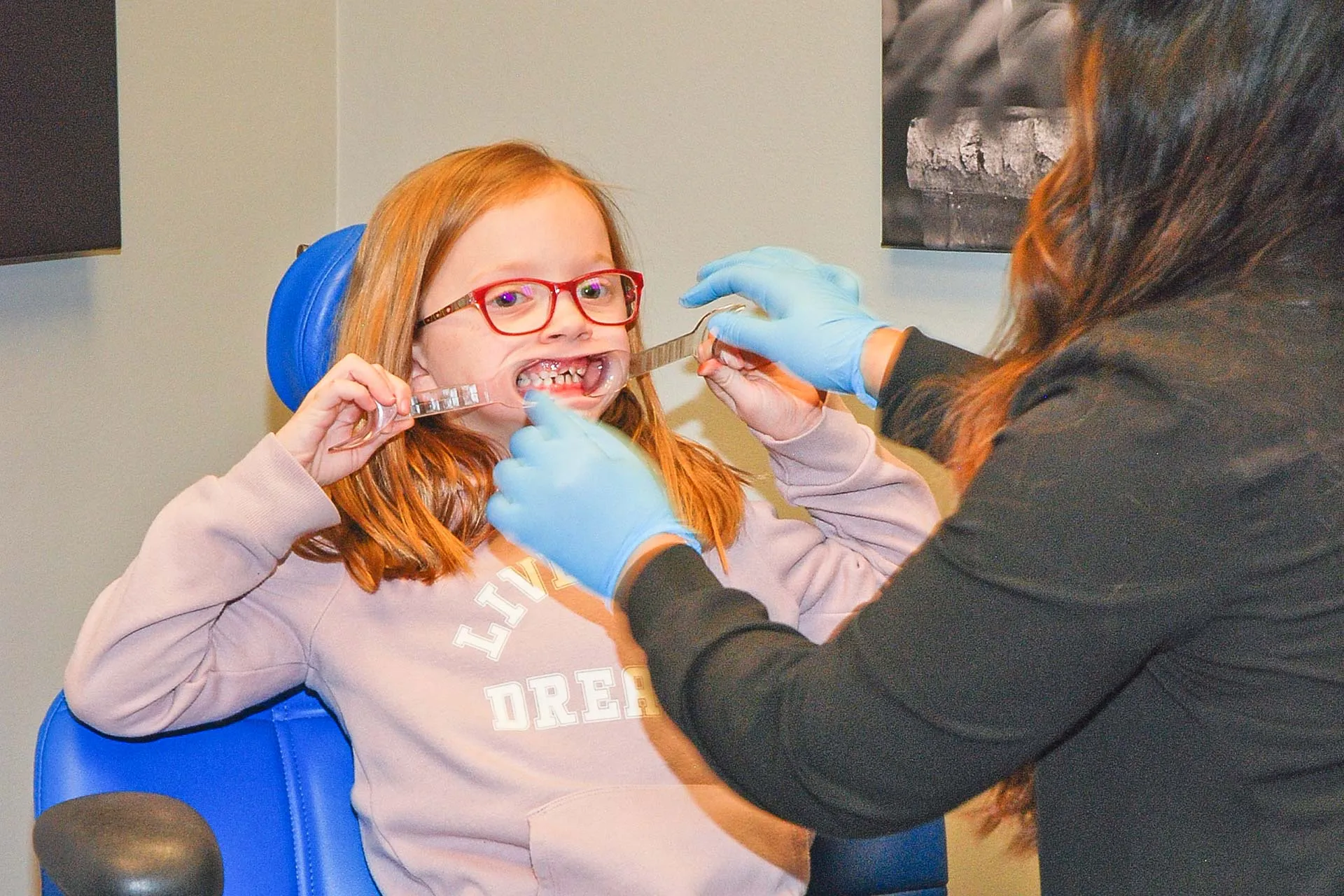
What Are Braces for Kids and Why Do Children Need Them?
Braces are orthodontic devices designed to correct misaligned teeth, crowding, and bite issues in children. They work by applying light, constant force that slowly shifts teeth into proper position over time. If you’re wondering whether your child needs braces, you’re not alone. The American Association of Orthodontists recommends every child have their first orthodontic evaluation by age 7, even if their smile looks perfectly fine. At Weber Orthodontics, our experienced orthodontists recommend that same timeline for families.
Why so early? At this age, an orthodontist can spot developing concerns with jaw growth and emerging teeth before they become more complex. Early detection doesn’t always mean early treatment. Sometimes it simply means monitoring your child’s development until the right time for braces arrives.
Children need braces for many reasons. Crowding happens when there isn’t enough room for all the permanent teeth to come in straight. Bite issues like overbite, underbite, and crossbite affect how the upper and lower teeth fit together. Spacing concerns create gaps that can impact chewing and speech.
Some children benefit from what’s called two-phase treatment. This approach addresses skeletal or developmental concerns early, often between ages 7-10, then completes alignment work once more permanent teeth have erupted. Not every child needs this approach, but for those who do, it can make a real difference in their final results.
How Braces Work: The Treatment Process From Start to Finish
Understanding what’s ahead helps both you and your child feel prepared. At Weber Orthodontics, the braces for kids treatment process involves five key steps: an initial evaluation with X-rays and digital scans, a custom treatment plan, braces placement (which takes 1-2 hours), adjustment visits every 4-8 weeks, and removal with retainer fitting. Most children wear braces for 12-24 months. Here’s what each step looks like in detail.
Your First Visit
Everything starts with a detailed look at your child’s teeth and bite. The orthodontist will take X-rays to see what’s happening beneath the gums, capture photos of your child’s teeth and face, and create digital scans of their bite. Weber Orthodontics uses digital scanners to create precise 3D images without messy impressions. Plan for about an hour at this visit.
Building a Custom Treatment Plan
Using all that information, your orthodontist creates a treatment plan built around your child’s specific needs. You’ll learn which type of braces makes the most sense, how long treatment should take, and what to expect along the way. This is your chance to ask questions and understand exactly what you’re signing up for.
Placement Day: What to Expect
The visit where braces go on typically takes 1-2 hours. No shots or numbing needed. The orthodontist cleans the teeth, applies a special bonding material, and attaches each bracket. Then the archwire goes in, connecting all the brackets. Most kids describe the process as “weird but not painful.”
Adjustments and Progress Checks
Every 4-8 weeks, you’ll bring your child back for adjustments. These shorter visits let the orthodontist tighten or change the wire, check progress, and make sure everything is moving according to plan. Each adjustment keeps the treatment on track.
The Big Day: Braces Come Off
When teeth have reached their final positions, the brackets come off. This visit is quick and painless. Your child will receive retainers to wear as directed. Retainers are essential for keeping those beautiful results in place. According to the AAO, retainer wear is critical for long-term stability after braces.
Treatment duration for most children falls in the 12-24 month range, though this varies based on the complexity of their case.
Benefits of Getting Braces for Kids During Childhood
Childhood is the ideal time for braces because growing jaws allow easier tooth movement, better bite correction, and reduced need for extractions or surgery later. Weber Orthodontics sees these advantages firsthand with families every day.
Key benefits of childhood braces include:
- Easier tooth movement, because jaws are still actively growing
- Prevention of future bite complications and uneven wear on teeth
- Straighter teeth that are simpler to brush and floss properly
- A confidence boost during the years when peer relationships matter most
- Your child may also avoid extractions or surgery down the road
Here’s a closer look at each one.
Growing Jaws Give Treatment a Head Start
Children’s bones are still developing, which means teeth can be guided into position more efficiently than in adults. The jaw itself can be influenced during growth spurts, potentially avoiding more invasive interventions later. This is one of the biggest reasons orthodontists encourage early evaluations for braces for kids.
Getting Ahead of Future Dental Concerns
Misaligned bites can lead to uneven tooth wear, jaw discomfort, and TMJ issues over time. Correcting these concerns during childhood sets your child up for better long-term oral health. Think of it as getting ahead of something that would only get harder to address with age.
Straighter Teeth Are Easier to Keep Clean
Straight teeth are simply easier to clean. When teeth overlap or crowd together, brushing and flossing become a challenge. Kids with properly aligned teeth have fewer hiding spots for plaque and bacteria. That means reduced risk of cavities and gum disease, both now and into adulthood.
The Confidence Factor
Let’s be honest. Kids notice their smiles. A child who feels self-conscious about crowded or crooked teeth may smile less, avoid photos, or feel uncomfortable in social situations. Many parents tell us that braces gave their child confidence during the years when peer relationships matter most.
Early Treatment Can Simplify the Road Ahead
When jaw growth can be guided during childhood, some children avoid the need for tooth extractions or corrective jaw surgery that might otherwise be necessary as adults. Early intervention can simplify what would have been a more complex treatment later, and that’s a win for the whole family.
Types of Braces for Kids: Comparing Your Options
Today’s kids have more choices than ever when it comes to braces. The three main types of braces for kids are traditional metal braces, ceramic (clear) braces, and Invisalign First aligners. Weber Orthodontics offers all three major options, and here’s how they compare.
| Type | Best For | Visibility | Durability | Compliance Needed |
|---|---|---|---|---|
| Traditional Metal Braces | Complex cases, all ages | Most visible | Very durable | Low (fixed) |
| Ceramic/Clear Braces | Older kids, teens concerned about appearance | Less visible | Moderate | Low (fixed) |
| Invisalign First | Mild to moderate cases, ages 6-10 | Nearly invisible | N/A (removable) | High (must wear 20-22 hrs/day) |
Traditional Metal Braces
These remain the most common choice for children. Modern metal braces are smaller and more comfortable than older versions, and they’re incredibly effective for complex cases involving significant crowding, rotation, or bite correction. Metal braces are also the most durable option, which matters when you’ve got an active kid who plays sports or roughhouses after school.
Ceramic or Clear Braces
Ceramic braces work the same way as metal braces but use tooth-colored or clear brackets that blend with teeth. They’re popular with older kids and teens who want a less noticeable option. One thing to keep in mind: ceramic brackets can chip or stain more easily than metal, so they may not be ideal for younger children or those who play contact sports.
Invisalign First
No brackets. No wires. Designed specifically for growing smiles, Invisalign First uses clear, removable aligners to straighten teeth. This option works well for mild to moderate cases in children ages 6-10. The catch? Your child must be responsible enough to wear the aligners 20-22 hours daily and remove them only for eating and brushing.
Your orthodontist’s recommendation will depend on your child’s specific diagnosis, age, maturity level, and lifestyle. During your free consult, you’ll discuss which option makes the most sense for your family.
How Much Do Braces for Kids Cost? Key Factors That Affect Pricing
At Weber Orthodontics, braces for kids typically cost between $3,000 and $7,000. The exact price depends on the type of braces, treatment complexity, duration, geographic location, and insurance coverage. Here’s how each factor plays a role for families considering braces for kids.
Braces Type and Material Costs
Traditional metal braces generally cost less than ceramic braces or Invisalign. The materials and technology involved affect the overall price, so the option that’s best for your child’s teeth may also influence what you pay. Your orthodontist can walk you through the cost differences during your first visit.
Treatment Complexity and Your Child’s Needs
A child with mild crowding will likely have a shorter, less expensive treatment than a child with severe bite issues requiring more extensive correction. The more work involved, the higher the cost. Every case is different, which is why a personalized evaluation matters.
How Treatment Duration Factors In
Longer treatments require more visits, more materials, and more of the orthodontist’s time. Cases that take 24 months will typically cost more than those completed in 12 months. The treatment plan your orthodontist creates will give you a clear timeline and cost estimate upfront.
Regional Pricing Differences
Orthodontic fees vary by region. Urban areas and high cost-of-living regions tend to have higher prices than rural communities. Pricing in your area may differ from national averages, though every practice sets its own fees based on the care they provide.
Insurance Coverage for Kids’ Braces
Many dental insurance plans include orthodontic benefits for children under 18. Coverage varies but may offset a significant portion of the cost. Check with your insurance provider to understand your specific benefits before your first visit.
Making Treatment Affordable
Weber Orthodontics offers flexible payment plans that can spread the cost over the length of treatment, making braces more accessible for families. Many practices offer low monthly payments with little to no interest. A free consult lets you understand exact costs before making any commitment.
Is Your Child Ready for Braces? Signs and Ideal Timing
Most children get braces between ages 9 and 14, after most permanent teeth have come in but while the jaw is still growing. The right timing, though, depends on your individual child. The orthodontists at Weber Orthodontics, who hold DDS and MS degrees, can help you determine the best window for starting treatment.
Physical Signs That Suggest an Evaluation Makes Sense
Watch for these indicators that it’s time to schedule an orthodontic evaluation:
- You notice their teeth look crowded or overlapping
- Noticeable gaps between teeth
- Teeth that don’t line up properly when biting down
- Difficulty chewing or biting into food
- Mouth breathing or snoring at night
- Thumb sucking that continues past age 5-6
- Baby teeth falling out earlier or later than expected
- Jaws that shift, click, or make sounds
Emotional Readiness Counts, Too
Braces require cooperation. Your child needs to brush carefully around brackets, avoid certain foods, and attend regular visits. Consider whether they’re mature enough to handle these responsibilities. Some 8-year-olds are ready. Some 12-year-olds need more time. You know your kid best, and there’s no shame in waiting until the timing feels right.
How to Know for Sure
An orthodontic evaluation is the definitive way to determine if your child needs braces and when treatment should begin. Even if you don’t see obvious concerns, that first visit by age 7 lets an orthodontist spot issues that aren’t visible to the untrained eye.
Some children benefit from early Phase 1 treatment. Others are better served by waiting until more permanent teeth erupt. The orthodontists at Weber Orthodontics can assess your child’s readiness during a free consult and recommend the approach that gives your child the best possible outcome.
Frequently Asked Questions About Braces for Kids
Do braces hurt?
Getting braces put on doesn’t hurt. The process feels unusual, and your child may experience mild soreness for a few days after placement and following each adjustment visit. Over-the-counter relievers and soft foods help. Most kids find that any soreness fades quickly and becomes less noticeable as they get used to wearing braces.
What foods should my child avoid with braces?
Hard, sticky, and chewy foods can damage braces. Have your child skip these:
- Popcorn
- Nuts
- Hard candy
- Ice
- Caramel and taffy
- Gum
Crunchy foods like apples and carrots are fine if cut into small pieces first. Corn on the cob? Cut it off the cob. Following these guidelines prevents broken brackets and keeps treatment on schedule.
How do I help my child brush and floss with braces?
Brushing takes longer with braces because food gets trapped around brackets. Have them brush after every meal using a soft-bristled brush, angling it to clean above and below each bracket. Flossing requires a floss threader or orthodontic flossers to get under the wire. At Weber Orthodontics, our team can demonstrate proper technique during any visit. Supervise the routine until you’re confident they’re doing a thorough job.
Can my child still play sports with braces?
Yes, absolutely. One important addition: an orthodontic mouthguard. These mouthguards are designed to fit over braces and protect both the teeth and the soft tissues of the mouth. Your orthodontist can recommend the right type for your child’s activities, whether that’s football, basketball, soccer, or any other sport.
What happens if a bracket breaks?
Broken brackets happen, especially with active kids. Contact your orthodontist to schedule a repair visit, and save any pieces that come off. In the meantime, orthodontic wax can cover sharp edges and prevent irritation. Your orthodontist can usually take care of it in one short visit, so there’s no need to worry.
How do I prepare my child emotionally for braces?
Frame braces positively. Talk about the beautiful, confident smiles they’re working toward. Let them choose colored bands for their brackets, and connect them with friends or family members who’ve had braces. Set realistic expectations about the adjustment period. Tons of kids wear braces (the AAO estimates millions of children across the U.S. are in treatment at any given time), and the time goes by faster than they think.
Braces for kids are one of the best investments you can make in your child’s long-term oral health and confidence. Whether your child needs early intervention or is ready for a full course of treatment, the right orthodontist will guide you through every step. At Weber Orthodontics, we treat each patient as if they were our only patient, and we take time to answer your questions, explain your options, and create a treatment plan that works for your family. To learn whether braces are right for your child, discover your treatment options during a free consult.